

Private Nature Reserve
Cap Lazare
Take a walk in nature...
The first part of this trail is easy as it follows a road with a view of our Citrus Orchard on your left. The trail is customized to offer experiences depending on our visitors’ own level of fitness and specific interests.Trail A is a continuous uphill climb which winds through an impressive palm forest against a backdrop of granite cliffs and boulders, offering a superb view overlooking the west coast of Mahé at Simone’s lookout’’. Trail B is a relatively easy, circular trail which leads to our small colony of Giant Land tortoises. On the way, you will discover many of our endemic trees which stand adjacent to the path. Cap Lazare nature trail is becoming a home for many of Seychelles’ endemic birds, such as the Seychelles bulbul and blue pigeon.

Plants of Cap Lazare
Browse through our plants list below

Carrot tree / Bwa Zoliker
It has been proven that the plant is good for treating hypertension..

Coco De Mer / KoKo de Mer
The coco-de-mer is the largest and heaviest single seed in the plant kingdom weighing up to 20kg...

Bottle Palm / Palmist Gargoulet

Bottle Palm / Palmist Gargoulet
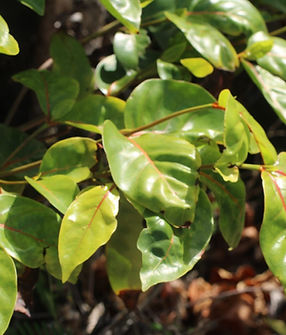
Canthium / Bwadir Rouz
The wood is hard and durable and used to make handles for different tools...

Giant-leaved fig / Lafous Gran Fey.
The common English name and Creole name both meaning fig with big leaves...

Mickey Mouse Bush / Bwa Kok
Common name in English is “Mickey Mouse Bush”as the black fruits sit on the red receptacle resembling the nose of Mickey Mouse surrounded by red ears...

Peacock Flower / Zegret
Flowers, leaves and seeds are used medicinally. Young seeds can be eaten raw to cure bad cough...

Bitter Orange
Bitter orange, sour orange, Seville orange, bigarade orange, or marmalade orange is in a narrow sense the citrus tree Citrus × aurantium[a] and its fruit. It is native to Southeast Asia and has been spread by humans to many parts of the world

Pomelo / Ponplemous
The genus “citrus” is the most important of the Rutaceae family. It consists of some 20 species with edible fruit...

Palmiste / Palmis
In the past, the plam heart was removed to produce the original 'millionaire's salad.' Today, however the plamist is legally protected.

Thief palm / Lantannyen Gran Fey
This name of this endemic palm arises from the fact that it was due to be grown in the Kew Gardens in 1857 but was stolen. The Creole name derives from the use of the dried leaves for thatching. The flowering season is year round.

Borneo Teak / Gayak
The tree has a long history in traditional medicine. A decoction of the bark was used for rheumatism, muscle rigidity and rheumatoid arthritis. A decoction of the leaves is used for headache and tooth ache. The fruits are used as a laxative. The timber was also used for building pirogues in the past.The flowering season is normally throughout the wet season.

Cinnamon / Kannel
The bark is used medicinally as an infusion or decoction against vomiting and nausea and also for expelling gas from the stomach. The leaves are used in a decoction against fever, coughs and cold and rheumatism. The flowering season is normally throughout the year.The plants dominate large tracts of forests in the Seychelles archipelago. It was introduced in the late 18th century for spice production and has likely profited from a window of opportunity in the 19th century when the Seychelles were largely deforested.

Premna / Bwa Siro
The leaves can be used in an infusion to treat cough...

Starfruit / Karanbol
The fruit is rich in anti-oxidants and vitamin C. Medicinally, the star fruit is eaten raw to reduce hypertension; however, precaution should be taken by people suffering from kidney failure. Its flower blooms normally in the dry season.

Tamarind / Tanmaren
The tree has a long medicinal history. The leaves are used for coughs, fever and sore throat while the fruits are consumed as a natural laxative. The fruit pulp is used for ice cream and to flavour food. The flowering season is during the wet season.

Whistling pine / Pye Sed
Conifer-like trees with light and feathery foliage, much branched, green to grey green twigs bearing tiny scale-leaves. The hard and reddish wood makes excellent charcoal for barbeques while the saplings make popular Christmas trees. Casuarinas already existed on the islands when the early European arrived late in the 16th century

Alexandrian Laura / Takamaka
Alexandrian Laural is a low-branching and slow-growing tree, which spreads with a broad and irregular crown. It usually reaches 8 to 30 m (26 to 98 ft) in height. Its trunk is thick and covered with black and cracked bark.

White Cedar / Kalisdipap
The light- coloured timber is used for furniture making, flooring and wood carving. It is a hard and durable timber and resistant to insects.

Breadfruit / Friyapen
This is a staple food in many tropical regions. The fruits are harvested green and are normally roasted, boialed or fried. It is also cooked in coconut milk and salted or, as a dessert it, is prepared in coconut milk and sugar. When ripe it is also oven baked with butter. The Creole name “Friyapen” derives from the French “fruit a pain” meaning breadfruit. It is native to the Western Pacific, New Guinea and the Malay Peninsula

Calabash Tree / Kalbasye
The English name derives from the similarity of the frilly branched...

Crab's Eye / Reglis
The English name derives from the similarity of the frilly branched...

Coral Hibiscus / Ibiskis Pandil
The English name derives from the similarity of the frilly branched...

Lemon / Sitron
The genus “citrus” is the most important of the Rutaceae family. It consists of some 20 species with edible fruit, all rich in vitamin c and essential oils. It is acidic and aromatic, ideal for aromatic beverages. It is an excellent replacement for vinegar. Among its many medicinal properties, lemon cleanses and regenerates the blood. The flowering season is normally throughout the year.

EggFruit / Bwa Monper
The wood were used for turning and cabinet making...

Brexia / Bwa Kato
The Creole name derives from the French “Bois cateau” meaning tree for the parrot...

Ebony / Bwa Sagay
The tree was popular among the medicine men, they would use the branches as a wand waving at anyone who may try to cast a spell on them.

Lantannyen Milpat
The Creole name refers to the movement of the leaves in the wind likened to that of the movement of a millipede.

Breadnut / Rima
The sweet orange-skinned fruits contain protein-rich seeds that are boiled and made into a paste or are roasted and used to make a coffeelike drink. The milk-white sap, giving the tree one of its popular names, is a nutritious drink. The light-colored hardwood can be used in construction.

Tree Heliotrope / Bwa Taba
The Creole name “bwa Taba” refers to similarity of the leaves to those of the tobacco leaves.

Fish poison tree / Bonnen Kare Bordmer
The seeds and leaves when grated and cast in rock pools, render fish unconscious and easy to catch.

Stilt Palm / Lantannyen Lat
In the past the roots were used to make laths for wall of huts and the trunk for water gutters (from the stream to the house now protected

Wild vanilla / Lavannir Maron
It is a climbing epiphytic orchid with leafless, thick, fleshy green to yellow trailing stem...

Madagascar periwinkle / Rozanmer
It is much used medicinally. A decoction of the leaves is used as a tonic against diabetes, a decoction of the plant against fever, high blood pressure and in the treatment in childhood leukemia. An infusion of the root and leaves is used in the treatment of stomach pain.

Wild Pineapple / Zannannan Maron
It was used to make local alcohol called jungle juice.

Yellow ivory coconut / Koko Rouz
It was introduced as an ornamental plant, but nowadays the water is used as a refreshing drink, as it contains a lot of water.

Common Frangipani / Franzipann
Introduced as an ornamental.

Hibiscus / Ibiskis
An infusion of 2-3 flowers is used as an eye wash. The flowers are edible either in salads or in a sauce for certain dish. Eating the fresh flower lowers blood pressure.

Red Ginger / Alpinya
Used as an ornamental garden and in flower arrangement...

Croton / Kroton
Introduced as an ornamental

Cordiline / Kordilin
Introduced as an ornamental

Crown of Thorn / Kouronn Depin
Introduced as an ornamental

Thornless Crown / Kouronn Sanzepin
Introduced as an ornamental

Mandarine orange / Mandarin
The genus “citrus” is the most important of the Rutaceae family...

Seville Orange / Zoranz Gro Lapo
The genus “citrus” is the most important of the Rutaceae family. It consists of some 20 species with edible fruit, all rich in vitamin c and essential oils. It is acidic and aromatic, ideal for aromatic beverages. It is an excellent replacement for vinegar. Among its many medicinal properties, lemon cleanses and regenerates the blood.

False Benzoin / Benzwen
The flowering season is during the wet season. The leaves can be used in an infusion to treat cough. A decoction of the leaves is drunk to lower the temperature in fever.

Bwadnat
The early settlers found the timber to be valuable and it was extensively used in the past, for housing and furniture...

Star Gooseberry / Bilenbel
Star gooseberry is a versatile fruit used in various culinary applications, particularly in Southeast Asian and Indian cuisine. It's known for its tart, sweet-and-sour flavor, making it suitable for both sweet and savory dishes. The fruit can be eaten fresh, pickled, candied, or used in chutneys, jams, and preserves

Kerosene Tree / Porse
“Kerosene Tree” comes from the fact that this tree burns easily. The wood is used to make furniture, paddles, drums and artifacts. The timber is pliable, easy to manipulate, and resistant to termites.

Variegated Screwpine / Vakwa Zonn
Introduced as an ornamental

Limeberry / Zoranzin
Medicinally, the leaves have been used to treat various ailments like diarrhea, colic, and skin diseases. The fruits are very acidic and the juice was used for treatment of fever and respiratory problem.

Useful Pandanus / Vakwa Sak
The leaves are used for weaving baskets, mats, and other items.

Sea Hibiscus / Var
The strong bark fibers were used to make ropes. The wood was used as support for vanilla vine.

Salt Bush / Vouloutye
In the past, the leaves were used to get rid of head lice, by crusing the leaves and tie on the head in a scarf.

Lather Leaf / Bwa Savon
The leaves were crushed and used as soap substistute. Used in traditional medicine against inflammation and against skin disease.
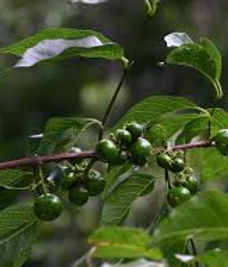
Spanish Tamarind / Vavang
The plant will not tolerate drought or cold. Growing naturally in rain forest understory, they also require shade when young, as well as moist, humus rich soil. These particulars usually make the plant difficult to cultivate, even in tropical areas. The fruit is edible though not much taste. A decoction of the leaves and bark is drunk against nausea.